Introduction: Building a Website is Easier Than You Think!
Are you dreaming of building your own website but not sure where to start? Well, you’re in the right place! Whether you’re a complete beginner or someone looking to brush up on your skills, this guide will take you through every step of building a website from scratch. By the end of this blog, you’ll know how to create a website that looks professional, feels unique, and represents YOU!
Imagine having a virtual presence that speaks for your business or personal brand—a place you can call your digital home. With the right tools and a few tips, that dream can become a reality in no time. Let’s dive in!
Step 1: Plan Your Website — The Blueprint
Know Your Purpose
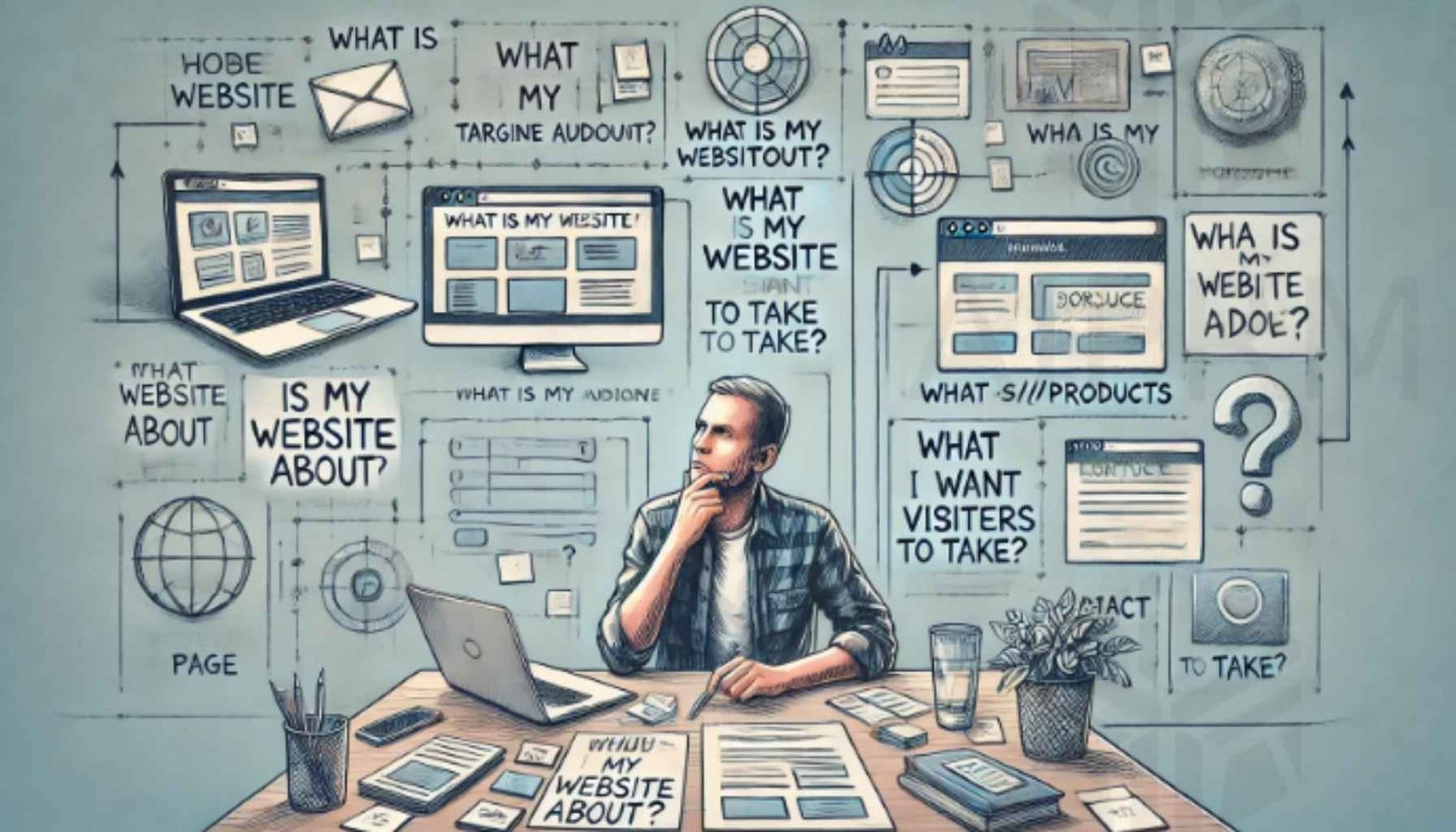
Every website starts with an idea, but it’s crucial to define your purpose before laying the first digital brick. Whether you’re creating a blog, an online store, or a portfolio, you must have a clear focus. Ask yourself:
- What is my website about?
- Who is my target audience?
- What actions do I want visitors to take?
Structure and Content Planning
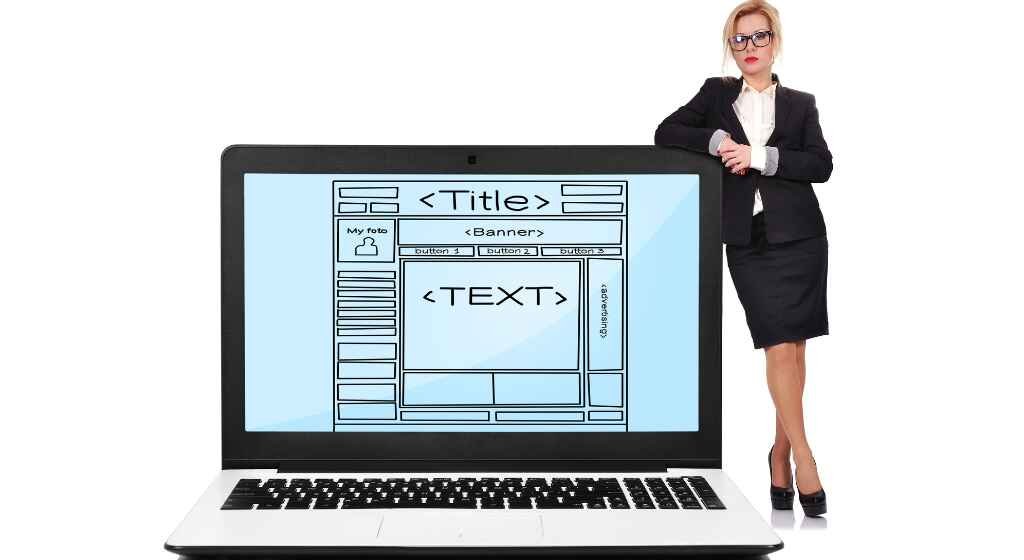
After knowing your purpose, it’s time to plan your website structure. Think about how you want visitors to move through your website—keep it smooth and easy. Here’s an example of a simple structure:
Remember, a well-planned structure = a better user experience!
Step 2: Choose Your Tools — Domain, Hosting, and CMS
A domain name is your website’s address on the web. Choose a name that is:
- Easy to remember and spell.
- Represents your brand or purpose.
Think of it as your website’s identity—a good name can stick in people’s minds!
Select a Web Hosting Service
Once you have a domain, you’ll need a place to store all the files that make up your website—that’s where hosting comes in. Some popular hosting services include:
Pro Tip: Choose a host that has good uptime and customer support to save you from future headaches.
Pick a Content Management System (CMS)
For beginners, WordPress is usually the go-to option. It’s flexible, beginner-friendly, and powers over 40% of the web. But there are other choices too, like Wix and Squarespace. A good CMS will make managing your content a breeze, even without any coding knowledge.
Step 3: Design Your Website — Make It Beautiful
Choose a Template or Theme
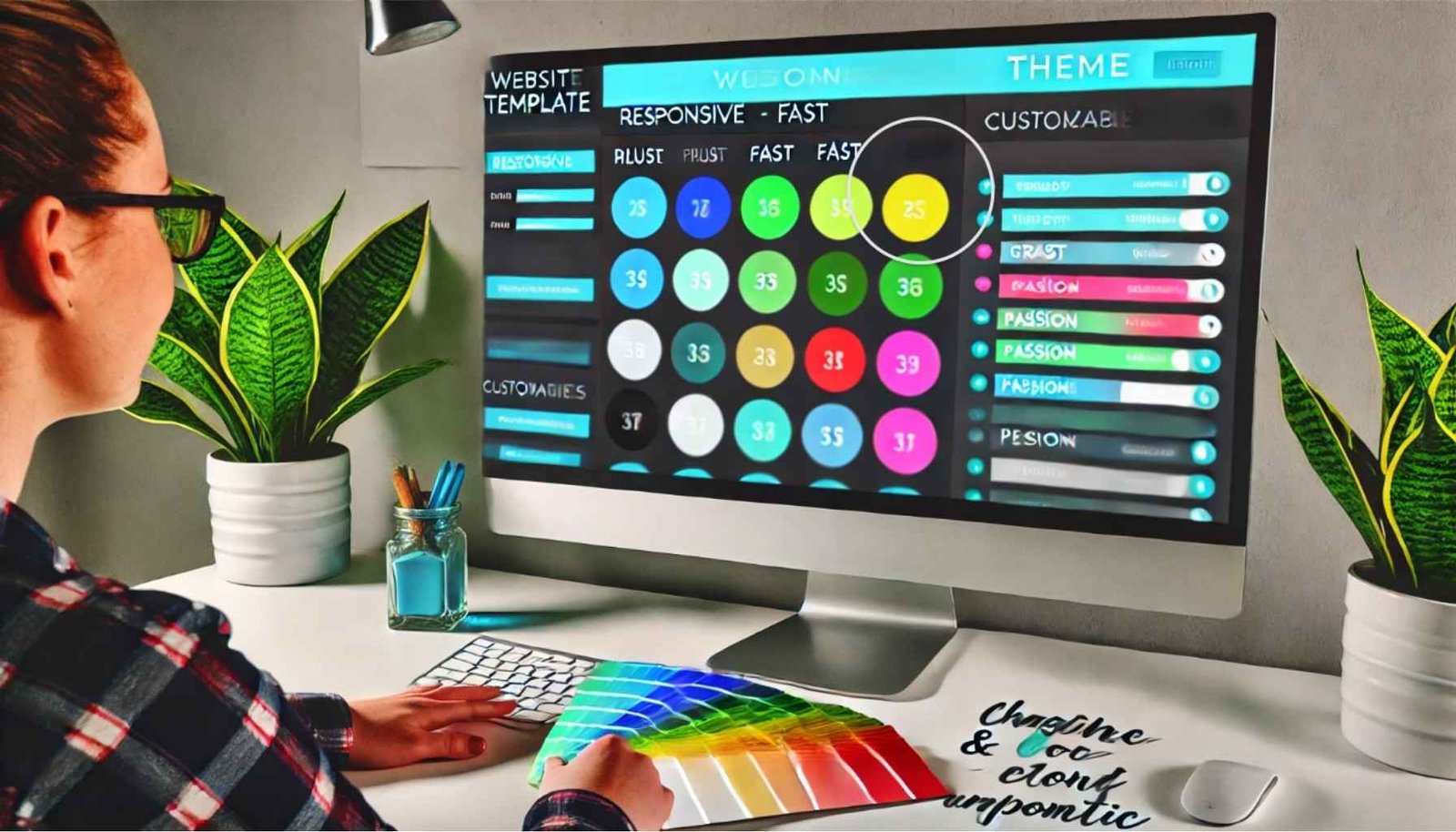
If you’re using WordPress or other website builders, you can select a theme that suits your brand. Look for something:
- Responsive: Works well on any device (desktop, tablet, mobile).
- Fast: Optimized for speed—nobody likes slow websites.
- Customizable: Flexible to match your style.
Note: You don’t need to be a graphic designer to create a stunning website. Many themes come with drag-and-drop tools that make customization easy.
Branding and Colors
Branding and Colors
Colors are more than just pretty shades—they reflect your brand personality. Here’s a quick guide:
Choose colors that align with the vibe you want to communicate.
Typography Matters
Fonts play a big role in setting the tone of your website. Are you going for a professional, playful, or modern look? Choose fonts that are easy to read and reflect your brand. Limit yourself to two or three fonts to keep things consistent and avoid visual clutter.
Pro Tip: Make sure the fonts you pick are legible on all devices. A beautiful font means nothing if your visitors can’t read it!
Step 4: Add Content that Converts — Words Matter!
Engaging Headlines and Copy
Your content should attract visitors, keep them engaged, and ultimately drive them to take action. Start with a bang! Your headline should be catchy, your copy—engaging. Don’t be afraid to use humor, storytelling, and bold claims (as long as you can back them up!).
Remember to add:
- CTAs (Calls to Action): Encourage visitors to take action like “Subscribe Now” or “Get Your Free Trial.”
- SEO Keywords: Sprinkle your keywords naturally throughout the content—beginning, middle, and end—but avoid keyword stuffing!
Visual Content
Images, videos, and infographics can make your content more engaging. Use high-quality visuals that are relevant to your message. People are more likely to stay on a page with eye-catching visuals.
Tip: Compress images to reduce loading times without compromising quality. Faster websites keep visitors happy!
Step 5: Test & Launch Your Website — The Grand Reveal
Testing Before Launch
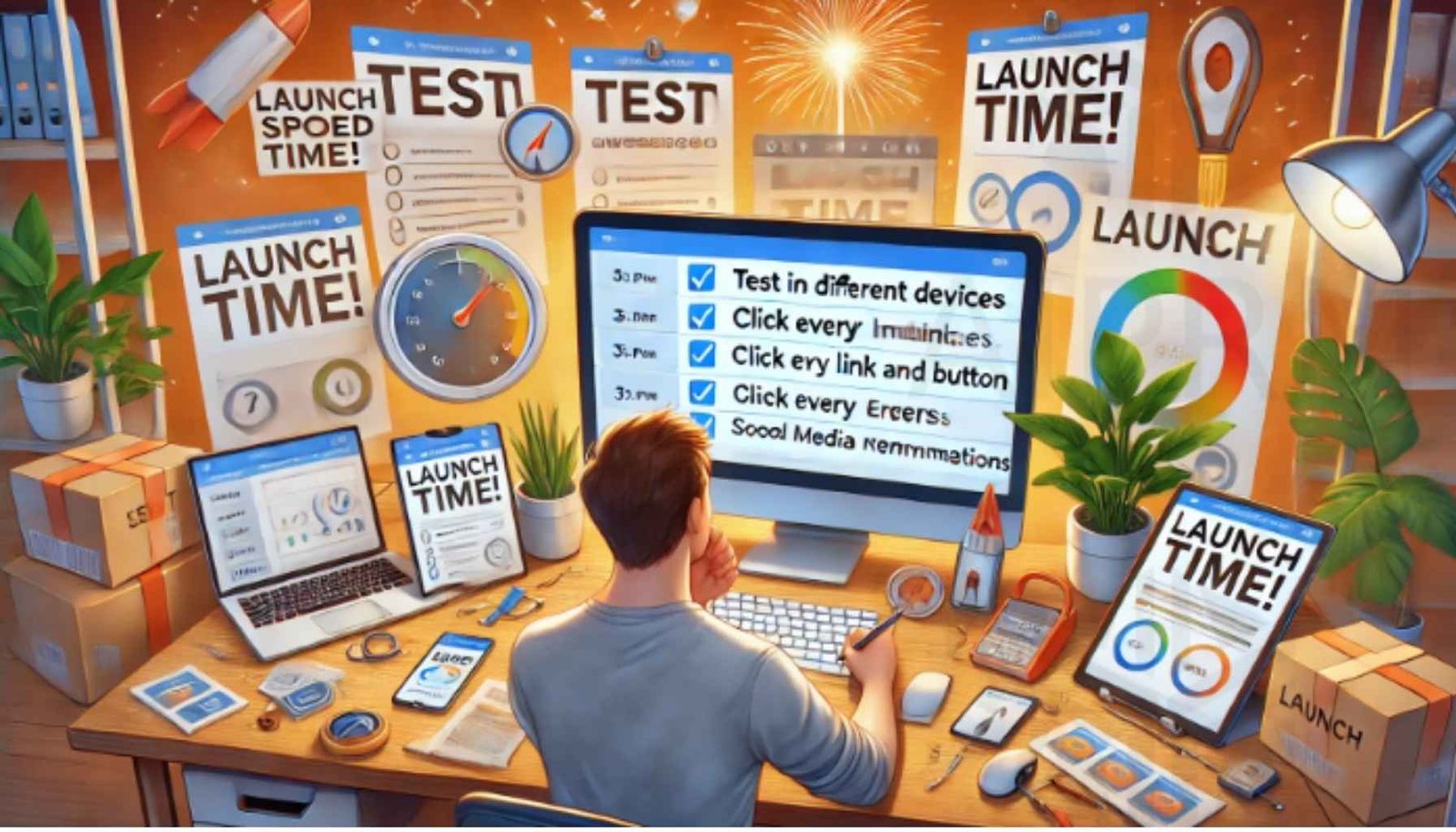
Testing your website before launch is crucial. You want your site to work flawlessly for every visitor. Be sure to:
- Test on different devices (smartphones, tablets, desktops).
- Click on every link and button to ensure they work.
- Proofread for spelling and grammar errors (it’s those small things that count!).
Check Your Site Speed
Site speed is a major factor in user experience. Use tools like Google PageSpeed Insights to check your site’s speed and get recommendations on how to improve it. A fast site means happy visitors and better search engine rankings!
Launch Time!
Finally, you’re ready to launch! Announce your new website to your social media followers, friends, and family. Consider running a promotional offer for new visitors if it’s an online store.
Step 6: Maintain and Grow Your Website — The Long Game
Regular Updates and Content
Websites are like plants—they need attention and nurturing to grow. Regularly update your site with fresh content, such as blog posts, videos, or new products. Consistent updates not only keep visitors engaged but also help your SEO rankings.
Analytics and Improvements
Use tools like Google Analytics to see what’s working and what’s not. Understanding your audience’s behavior will help you optimize the site and improve their experience over time.
- Monitor traffic sources.
- Look at conversion rates.
- Check which pages get the most views.
These insights will guide you in making data-backed decisions to take your website to the next level.
Security and Backups
Keeping your website secure is essential. Use plugins like Wordfence or Sucuri to add an extra layer of security to your WordPress site. Also, set up regular backups so you can restore your website quickly in case anything goes wrong.
Tip: Always keep your CMS, themes, and plugins updated to avoid vulnerabilities.
Conclusion
Take Action and Build Your Dream Website
Building a website from scratch isn’t rocket science—with the right tools, a plan, and a bit of creativity, you’ll be up and running in no time. Remember to follow these steps, keep things fun, and don’t shy away from learning along the way.
Your digital dream is only a few clicks away—go make it happen!
Ready to build your website? Start today and unleash your creativity!





















8 thoughts on “The Ultimate Guide to Building a Website From Scratch”
This is my first time pay a quick visit at here and i am really happy to read everything at one place
Thanks Mr. Patterson
I am truly thankful to the owner of this web site who has shared this fantastic piece of writing at at this place.
Thanks Alexis Park!
I like the efforts you have put in this, regards for all the great content.
Thanks Alice Greer!
I do not even understand how I ended up here, but I assumed this publish used to be great
Thanks Misael Holland!